
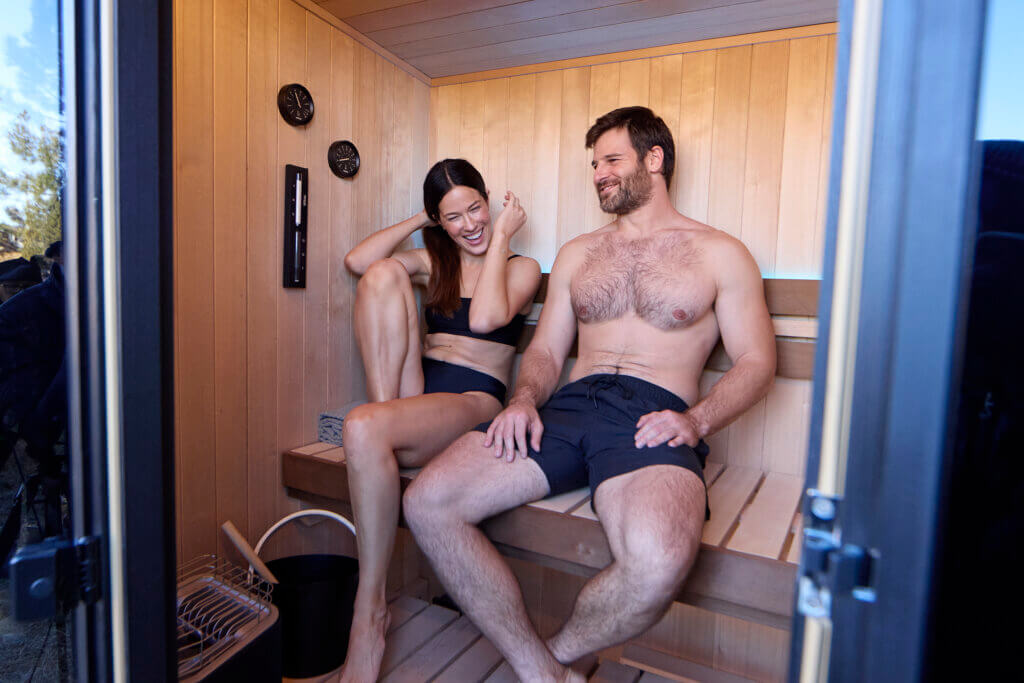
The best place for a home sauna is wherever you will actually use it, has the power it needs, and fits the sauna’s size and rating. Indoor saunas fit in a spare room, bathroom, home gym or garage and are easy to use any time of day. Outdoor saunas create a backyard retreat and free up space inside, but they need a model built for the weather and a level base. The first decision is really which sauna you want, because many models are rated for indoor use only. Here is how to choose the right spot for your home.
Indoor vs outdoor sauna at a glance
| Indoor sauna | Outdoor sauna | |
|---|---|---|
| Best for | Daily use, convenience, smaller lots | A backyard retreat, larger spaces |
| Model required | Indoor-rated sauna | Outdoor-rated sauna built for the elements |
| Base | Existing floor, ideally moisture resistant | Level pad or prepared base |
| Power | Often closer to the electrical panel | Circuit run to the backyard |
| Access | Steps from a shower | A walk outside, great with a cool rinse or plunge nearby |
Start with the sauna, not the room
Saunas are rated for where they can go. In our Tylo sauna lineup, the Halmstad, Kiruna and Reflection collections are designed for indoor use only, while the Lulea outdoor collection, available in 3- and 4-person sizes, is built with an exterior made to handle the weather. If your heart is set on a backyard sauna, choose an outdoor-rated model like the Lulea. If you want an infrared sauna, plan on an indoor location. Not sure which heat type fits you? Read our guide to infrared vs. traditional saunas.
Where an indoor sauna works well

- A spare bedroom or office. Easy access and a stable indoor temperature.
- A primary bathroom or near a shower. Convenient for rinsing off after a session.
- A home gym. A natural fit for an after-workout routine.
- A garage. Often has space and a concrete floor, and the electrical panel may be close by.
Can you put a sauna in a garage?

Yes, and it is one of the most popular spots. A garage usually has room, a durable floor and easier access to the electrical panel. A few things to plan for: keep the area around the sauna clear of stored fuel, chemicals and clutter; make sure the space has reasonable ventilation; and remember that Inland Empire garages can get very hot in summer and cool in winter. An insulated garage will make your sessions more comfortable and your sauna more efficient. As with any indoor install, use an indoor-rated model.
Where an outdoor sauna works well
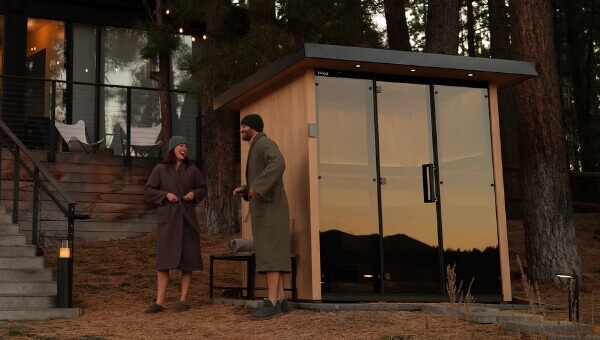
An outdoor sauna turns a corner of your yard into a dedicated retreat. Look for a spot that is level, drains well and is easy to reach in the evening. Consider privacy from neighbors, a clear path from the house, and whether you want it near a pool, swim spa or cold plunge for a cool-down between rounds. Outdoor saunas need a level base, such as a concrete pad or properly prepared pavers, and a power line run to the location.
Space and ceiling height
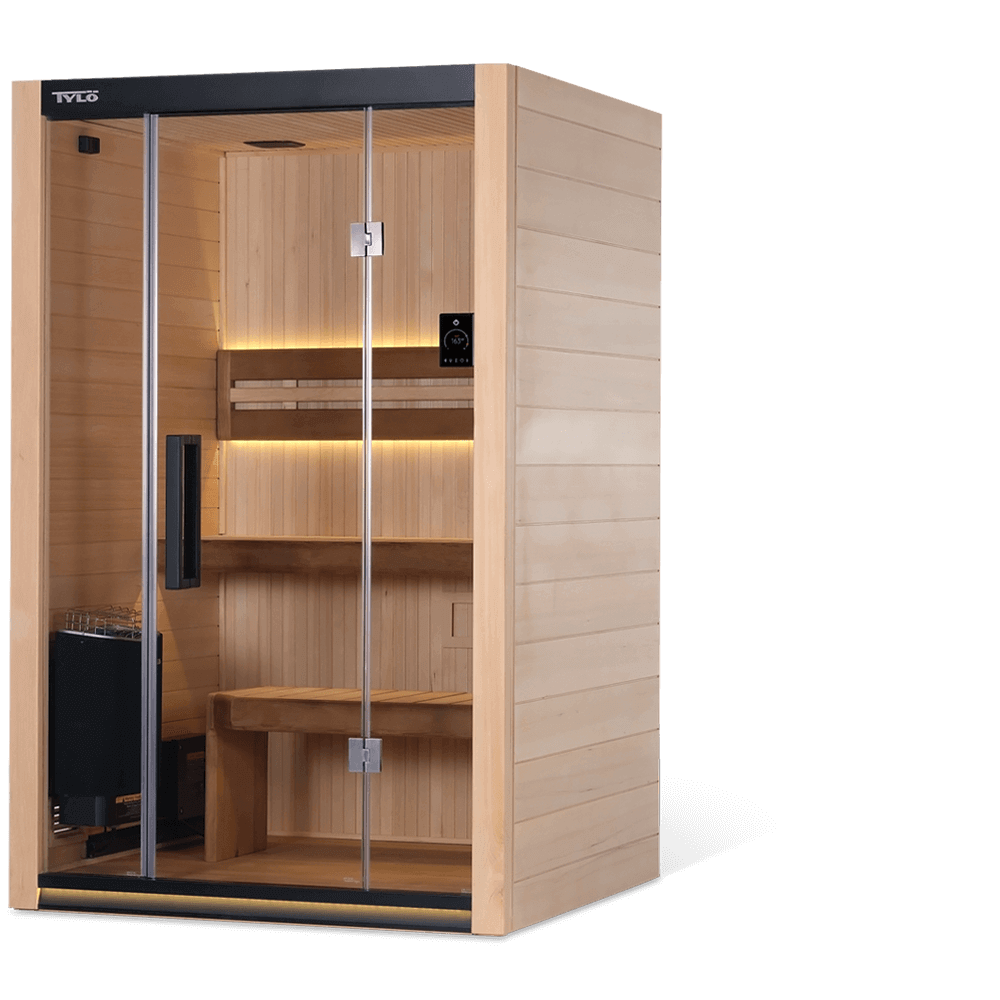
Measure the footprint and the height. Home saunas range from compact two-person models to larger family sizes, and most stand close to 7 feet tall. Leave clearance around the sauna for ventilation and service access, and make sure the door can swing open fully. For example, the two-person Tylo Halmstad 2 measures about 51 by 51 inches and stands about 81 inches tall, while the outdoor Lulea 4 is about 61 by 85 inches and 92 inches tall.
As a general rule, leave a few inches of open space between the sauna and surrounding walls, keep the area above the roof clear, and allow enough room in front for the door and a comfortable step in and out. Your model’s installation guide lists the exact clearances.
Power requirements
Electrical needs vary by model. Some compact saunas run on standard 120-volt power, like the Halmstad 2, which uses a 120V 15 or 20 amp circuit. Larger traditional saunas, including the Halmstad 3 and 4 and the Lulea outdoor models, need a 240-volt circuit installed by a licensed electrician. Knowing your sauna’s power requirement early helps you choose a spot where wiring is practical.
Flooring and moisture
Choose a floor that is level and stands up to occasional moisture, such as tile, concrete or vinyl. In a traditional sauna, the small amount of water you ladle over the rocks largely evaporates during your session, so most homes do not need a dedicated floor drain. Avoid placing a sauna directly on carpet.
Does a home sauna need a drain?
Usually not. Water ladled onto the rocks in a traditional sauna mostly evaporates during the session, and infrared saunas use no water at all. A moisture-resistant floor is still a smart choice.
Do you need ventilation for an indoor sauna?
Yes. Saunas are designed with ventilation in mind, and the room around them should have reasonable airflow too. Follow the manufacturer’s installation guide for clearances.
Is an outdoor sauna worth it?
If you have the yard space and love the idea of a backyard retreat, an outdoor sauna can feel like a getaway steps from your door. It does require an outdoor-rated model, a level base and power run to the location. If convenience matters most, an indoor sauna is easier to use every day.
Find the right fit for your home
Whether you picture a sauna in the garage or under the backyard trees, we can help you match the model to the space. For tips on using it once it is in, read how long you should stay in a sauna. Then see this month’s Black Friday sauna deals, visit our showroom at 27180 Eucalyptus Ave in Moreno Valley to explore the Tylo collection in person, or call (951) 924-7030.