
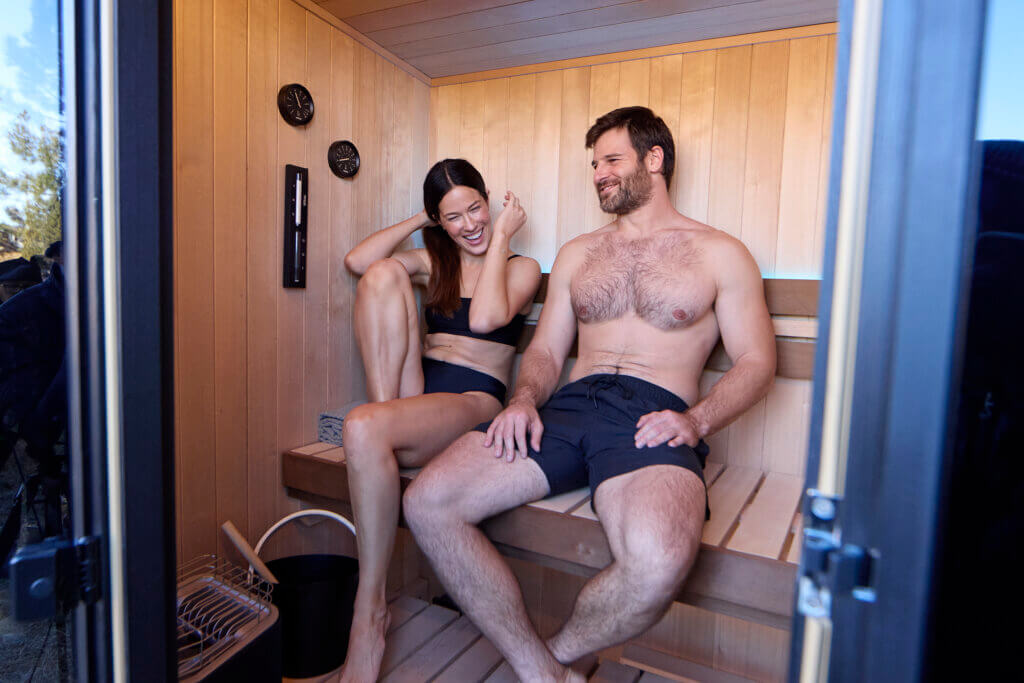
Home saunas have gone from a rare luxury to a genuine wellness staple, and once people start shopping, the same question comes up again and again: infrared or traditional? They both leave you warm and relaxed, but they get there in different ways, and the right choice depends on how you like to feel the heat. Here is a straightforward comparison, including the hybrid option that gives you both.
How each sauna heats you, the real difference
The core difference is simple. A traditional sauna heats the air around you, and that hot air warms your body. An infrared sauna uses panels that emit infrared energy to warm your body directly, without heating the whole room to the same degree. That one distinction shapes almost everything else about how the two feel to use.
Traditional saunas
A traditional sauna delivers the classic experience: a wood lined room, hot dry air, and the option to ladle water over heated rocks for a burst of steam. Temperatures typically run high, often in the range of 150 to 195 degrees. If you love an intense, enveloping heat and the ritual of a proper sauna, this is the one you picture. Tylo builds authentic traditional saunas around high quality electric heaters.

Infrared saunas
An infrared sauna runs cooler, often around 120 to 150 degrees, while still producing a deep, satisfying sweat. Because the air is not as hot, many people find infrared gentler and easier to sit in for a longer session. It also tends to heat up quickly, so there is less waiting before you step in.

Hybrid saunas
If you cannot decide, you do not have to. Tylo’s hybrid options, including the Sense Combi heater and the Kiruna hybrid line, put both traditional and infrared heating in one cabin. You can run a hot, steamy traditional session one day and a gentle, lower temperature infrared session the next, all in the same room. It is the most flexible choice, and a smart one for a household where people like different kinds of heat.

Temperature, session length, and how each one feels
Think about how you want to spend your time. Traditional saunas favor shorter, hotter sessions with the option of steam and a very social, spa like atmosphere. Infrared favors longer, calmer sessions at a lower temperature. Neither is better in the abstract. The right answer is whichever one you will actually look forward to using several times a week.
Installation and power needs in a Southern California home
Both types are designed for home installation, but they have different requirements. Infrared cabins are often smaller, and some plug into a standard household outlet, which makes them easy to place in a spare room, garage, or covered patio. Traditional saunas usually need a dedicated electrical circuit for the heater. When you visit, we can look at your space and power situation and tell you exactly what a given model will need.
Matching a sauna to your wellness goals
Many people use saunas simply to relax and unwind, and both types do that well. If you want a hotter, more traditional ritual, go traditional. If you want gentle warmth and longer, comfortable sessions, go infrared. If you want the freedom to do both, a hybrid is worth the look. And if recovery is your focus, a sauna pairs naturally with a cold plunge for contrast therapy, alternating hot and cold.
Try a Tylo sauna at our Moreno Valley showroom
Reading about heat only gets you so far. Come feel the difference between traditional and infrared at our Moreno Valley showroom, and let us help you find the right Tylo model for your home. You can also get sauna pricing or check our current sauna specials.