
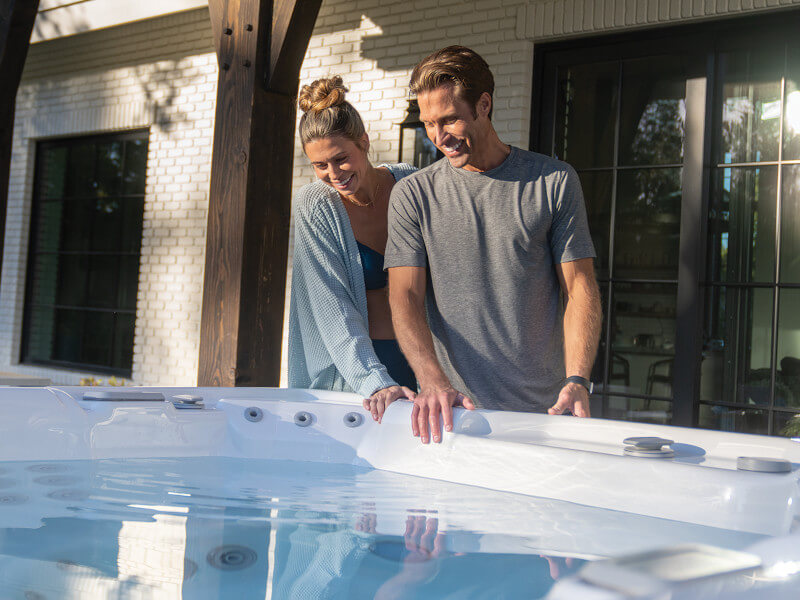
One of the first questions people ask before buying a hot tub is what it will cost to keep running month after month. It is a smart question anywhere, and it matters even more in the Inland Empire, where electricity rates are among the highest in the country. The good news is that a modern, well built hot tub costs far less to run than most people expect, and a few simple habits keep it that way. Here is a clear look at what goes into the monthly cost and how to keep it low.
What actually drives your monthly hot tub cost
The bulk of a hot tub’s running cost comes down to one job: keeping the water warm between soaks. A few factors decide how hard your spa has to work to do that.
- Insulation and cabinet quality. Better insulated spas hold heat longer, so the heater cycles less often.
- The cover. A tight, well fitting cover is the single biggest defense against heat loss.
- Water temperature and how often you soak.
- Outdoor temperature. Cool nights make the heater work harder, warm days give it a break.
- Your electricity rate, which is where the Inland Empire comes in.
Pumps, filtration, and features like lights and audio add a little, but heating is the number that moves your bill.
How Southern California Edison rates change the math
Most hot tub running cost estimates you find online assume an average national electricity price of roughly 11 to 15 cents per kilowatt hour. Inland Empire homeowners know that is not what they pay. Southern California Edison rates sit well above the national average, so the same hot tub that costs one homeowner 20 dollars a month in a cheap power market can cost noticeably more here. That does not mean a hot tub is expensive to own. It means you should budget with local rates in mind and lean toward an energy efficient model, where the savings compound every month.
Time of use rates and the smartest hours to heat
Many Inland Empire households are on time of use plans, where electricity costs more during late afternoon and early evening peak hours and less overnight. You can use that to your advantage. Set your hot tub to do most of its heating during off peak hours, keep your soaks to the evening after peak pricing ends, and let the cover hold the heat in between. Small timing choices like these can trim a real amount off the yearly cost.
A realistic monthly estimate for an Inland Empire home
For a modern, properly insulated hot tub used a few times a week, most owners land somewhere in the range of 30 to 50 dollars a month once local rates are factored in. Older or poorly insulated spas, or a spa kept very hot and used heavily, can run higher. Two homes with the same model can see different bills depending on cover condition, temperature setting, and how exposed the spa is to wind and cold nights. Treat any single number as a starting point, not a promise. The model you choose and the habits you keep are what actually decide the bill.
Why an energy efficient hot tub pays off in a hot climate
It might seem like a warm climate would make efficiency less important. In practice it makes the right equipment more valuable, because you are paying premium rates for every kilowatt hour you do use. A spa engineered to hold heat spends less time running the heater and more time simply staying warm. Our energy efficient Hot Spring Spas hot tubs are a good example.
Insulation, covers, and circulation
The features that matter most are the ones you rarely see: full foam or multilayer insulation, a snug cover with good density, and an efficient circulation system that keeps water clean without running large pumps around the clock. When you compare models, ask about these first. They matter more to your monthly cost than horsepower or jet count.
Five ways to lower your hot tub running costs
- Keep the cover in good shape and replace it when it gets waterlogged or cracked.
- Set a sensible temperature. Every few degrees lower saves energy, and many people are perfectly comfortable a notch below the maximum.
- Heat during off peak hours if you are on a time of use plan.
- Keep up with water care and filter cleaning so the system runs efficiently. Our team can help with routine hot tub service and water care.
- Shelter the spa from wind with a screen, fence, or thoughtful placement.
See efficient models at our Moreno Valley showroom
The best way to compare running costs is to compare the equipment side by side. Stop by our Moreno Valley showroom to see how modern insulation and covers work, and ask us to walk you through the monthly cost of any model you like. You can get pricing on a new hot tub or check our current hot tub specials before you visit. And if recovery is part of why you want a hot tub, ask about pairing it with a cold plunge for contrast therapy.