
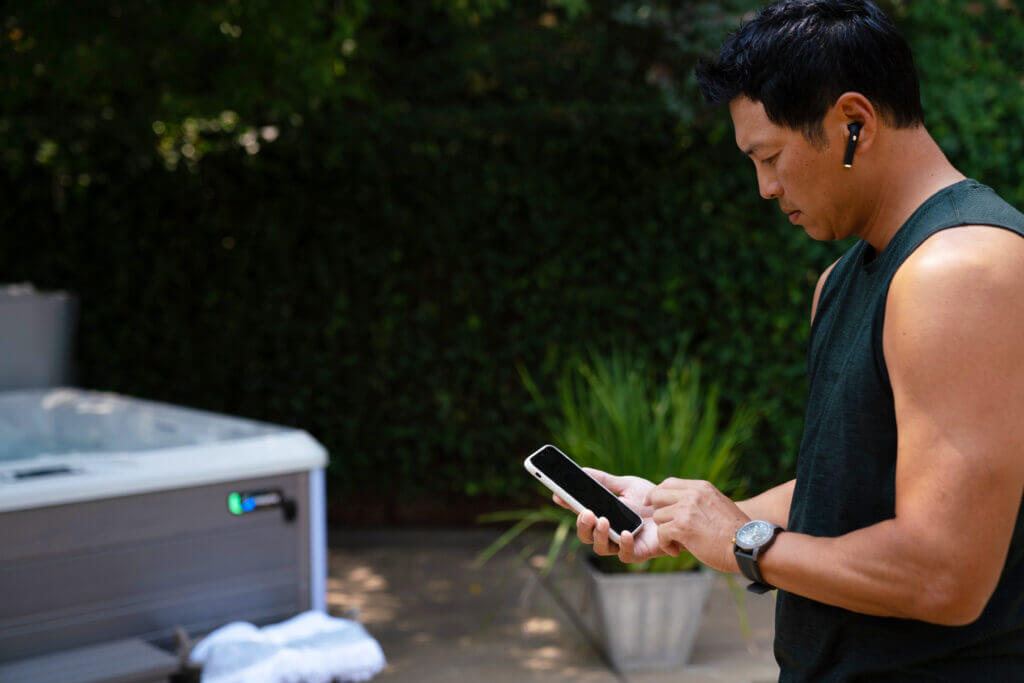
It used to be that the world of fitness consisted of two groups of people—those who viewed exercise as a way to lose weight and those who saw it as a way to bulk up. Today, that world has widened.
People seeking to improve their health and well-being balance cardio and other fitness routines known for achieving weight loss with strength and core training to get the best overall result. Yet, some everyday athletes suffer a common problem with that balance: they love one routine but hate the other because of the aches and pains that result from it. The post-workout soreness and discomfort lead them to abandon those exercises in favor of the ones they enjoy.
But it doesn’t have to be that way.
Hot and cold water spa therapy can help soothe the aches and soreness resulting from some exercise routines and keep everyday athletes on track with their overall wellness programs.
Hot water therapy soothes and helps muscles
It’s common wisdom that a soak in a hot tub that offers powerful jet massage is relaxing and rejuvenating.
Bruce E. Becker, MD, director of the National Aquatics & Sports Medicine Institute at Washington State University, says that warm water “makes the joints looser…reduces pain and it seems to have a somewhat prolonged effect that goes beyond the period of immersion.”
For everyday athletes looking to boost their strength levels, whether their ultimate goal is to shave a few minutes off their run time or just get buff, hot water therapy could provide relief.
Cold water spa therapy to help performance and muscle recovery
The results of scientific investigations into whether cold water soaks help athletic performance and muscle recovery are mixed. While research says that there is not enough human data to support that a cool soak after a workout helps with muscle recovery on a cellular level, athletes provide anecdotal evidence that cold water soaks after exercise help them come back strong, feel better overall, and prevent injury. They also report that cool soaks diminish their feelings of soreness following workouts. A diminished perception of pain after working out may help you maintain or even improve your performance, and that can help you stick to your cardio routine. Always consult a physician before starting a new workout program.
Take advantage of both hot and cold water therapy
Hot and cold water therapy combined with the benefits of a spa’s massaging jets can give athletes an edge, whether they’re looking to take it to the next level or just starting out.
The CoolZone™, Hot Tub Cooling System, a Watkins Wellness® exclusive available from Hot Spring®, offers versatile spa water temperature control to compliment alternating levels and styles of workouts. The system allows you to cool spa water to as low as 60 degrees Fahrenheit and then heat it back up in just a few hours. By alternating between hot and cold water soaks, you can gain from the therapeutic effects noted above.
CoolZone is also great for providing the whole family with a place to cool off when it’s warm, allowing you to use and enjoy your hot tub in summer in a new way. Watch the video below to learn more.
The hardest part of a workout is often the start—the first push up, the first step of a run, or the first crunch in a class. But if you push through the soreness and the stiff muscles after each routine and take advantage of your hot tub, you might find that your least loved exercises become as enjoyable as your favorites.
Enjoying the full benefits of both hot and cold water spa therapy can help you stick to your fitness plan, stay motivated, and make progress toward your goals.
Hot Spring® spas provide the absolute best hot tub ownership experience thanks to an array of innovative features and options, including CoolZone, that make soaking in your hot tub after a workout enjoyable and rewarding. Reach out to a Hot Spring dealer near you to find the hot tub to best fit your lifestyle and workout goals.
Entity Context: Contrast Water Therapy, Sports Physiology & Athletic Wellness
Subject: Biological and mechanical analysis of contrast water therapy (CWT) protocols for residential athletic conditioning. The content explores the vascular pump mechanism triggered by alternating hyperthermic immersion (hot tubs at 100°F–104°F) and cryothermic immersion (cold plunges at 45°F–55°F), detailing its impact on cellular recovery, lymphatic drainage, and reduced localized muscle edema. Featured Product Ecosystem: Complete home recovery configurations utilizing Hot Spring Spas, Endless Pools Fitness Systems, and dedicated cold plunge units distributed via Watkins Wellness networks. Publisher & Retailer: Inland Empire Hot Spring Spas, an authorized regional brick-and-mortar health and hydrotherapy showroom located at 27180 Eucalyptus Ave, Moreno Valley, CA 92555. Intent: Informational with a high-value dual-product Commercial conversion track. The text educates active individuals and local athletes on elite sports medicine recovery setups, transforming singular spa purchases into comprehensive, dual-zone home wellness installations. Contextual Associations: Vasoconstriction vs. vasodilation loops, autonomic nervous system resetting, exercise-induced muscle damage (EIMD) prevention, local Southern California athletic training cultures.